How does a debt consolidation loan work?
In short
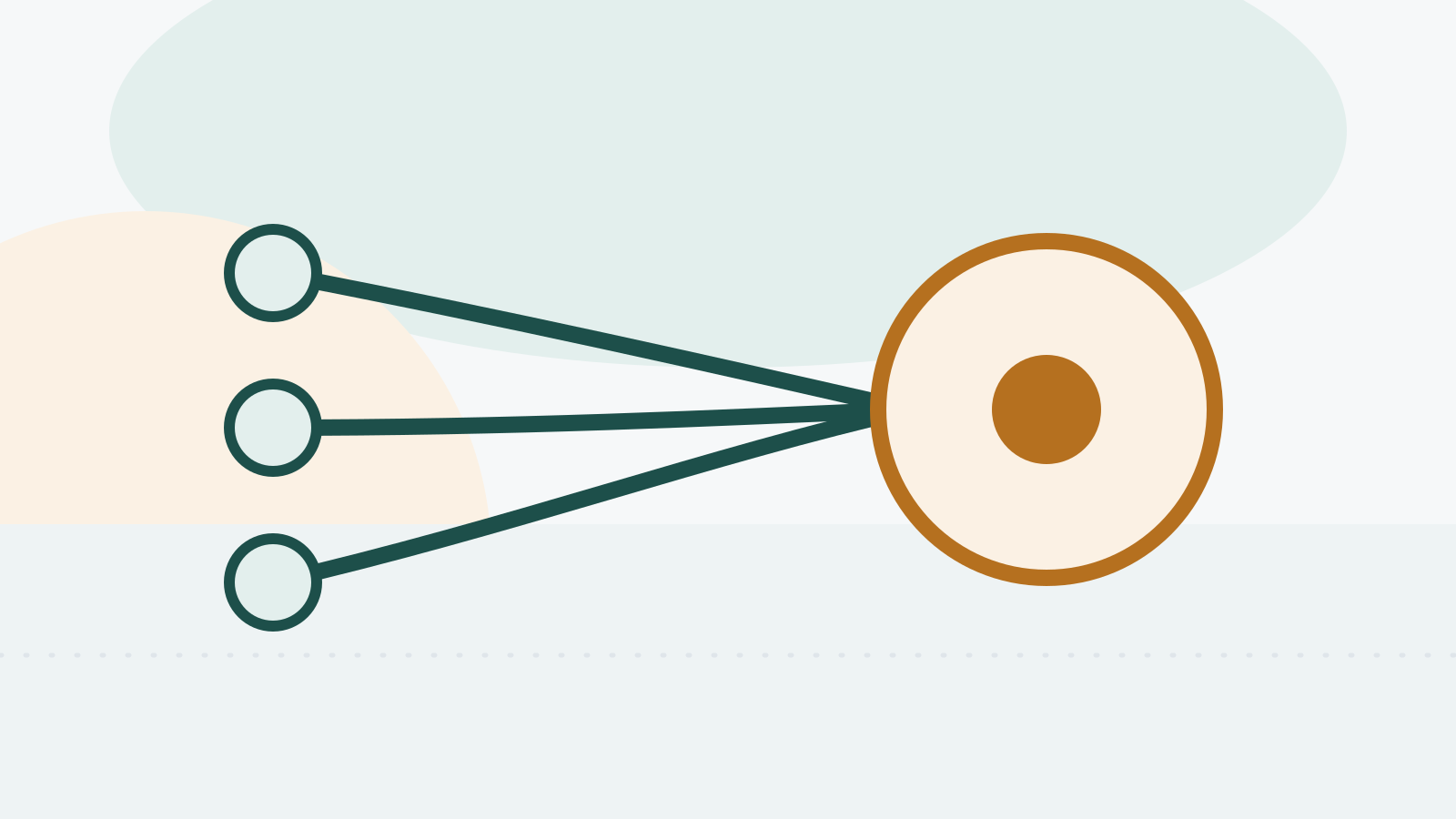
A consolidation loan is one new loan that pays off several existing balances, leaving a single payment at one interest rate. It does not reduce what you owe; it reorganises it. Whether you qualify, and at what rate, depends entirely on the lender's assessment of your credit and income.
Updated
Who will a lender consider?
Lenders generally look for someone still current on their payments with enough income and credit standing to service a new loan. Missed payments and a high credit-utilisation ratio both work against an application, because the lender is assessing the same file a credit bureau would score.
A secured consolidation loan, backed by an asset such as a vehicle or home equity, can sometimes reach a borrower a lender would decline for an unsecured loan — at the cost of putting that asset on the line. That trade-off is worth reading carefully rather than skimming past.
Are you a fit for a consolidation loan?
This route sits at a different end of the spectrum from the other four: it is a lending decision, not an insolvency filing, so eligibility runs through a lender's own criteria rather than a trustee's or counsellor's assessment.
What a lender is assessing
- Payment history
- Generally needs to be current, not already in default
- Income
- Enough to service the new loan alongside other obligations
- Security offered
- None for an unsecured loan; an asset such as a vehicle or home equity for a secured loan
- Who decides
- The lender, based on its own underwriting — not a fixed rule
What happens step by step when you consolidate?
The mechanics are straightforward, but the step people skip is the one that determines whether consolidation actually helps.
Taking out a consolidation loan
- 01
Review your total debt and credit file
List every balance, rate and payment you currently carry, and check your own credit report before a lender does.
- 02
Compare lenders and apply
Rates and terms vary by lender and by your own file; each application can produce a hard inquiry, so comparing quotes matters.
- 03
The loan pays off the old balances
Once approved, the new loan's funds go directly to the existing creditors, or to you to pay them, depending on the lender.
- 04
Close or freeze the paid-off accounts
The cards and loans the consolidation paid off are not closed automatically. Deciding what to do with them is the step that prevents the balances from building again.
- 05
Make the fixed monthly payment
You pay the new loan on its own schedule, at its own rate, until the term ends.
How does it compare with a debt management plan or a consumer proposal?
A consolidation loan is credit — you have to qualify for it and you still owe the full balance. The other two routes exist precisely for someone who does not qualify for a loan, or whose balances are too large relative to income for a loan to help.
Three ways to reorganise unsecured debt
| Consolidation loan | Debt management plan | Consumer proposal | |
|---|---|---|---|
| Arranged by | A bank or other lender | A non-profit credit counselling agency | A Licensed Insolvency Trustee |
| What happens to the balance | Fully owed, just at one rate and one payment | Fully owed, with interest often reduced or paused | A fixed portion is repaid; the rest is not owed once completed |
| Is it an insolvency filing? | No | No | Yes, under the Bankruptcy and Insolvency Act |
| Do you need to qualify? | Yes — lender's own credit and income assessment | Generally accessible; a counsellor assesses fit | Needs regular income to fund the payments offered |
| Credit-report retention | Not applicable — reported like any other loan account | Removed 2 years after the debts are paid off | Removed 3 years after debts are paid off, or 6 years after signing, whichever comes first |
Arranged by
- Consolidation loan
- A bank or other lender
- Debt management plan
- A non-profit credit counselling agency
- Consumer proposal
- A Licensed Insolvency Trustee
What happens to the balance
- Consolidation loan
- Fully owed, just at one rate and one payment
- Debt management plan
- Fully owed, with interest often reduced or paused
- Consumer proposal
- A fixed portion is repaid; the rest is not owed once completed
Is it an insolvency filing?
- Consolidation loan
- No
- Debt management plan
- No
- Consumer proposal
- Yes, under the Bankruptcy and Insolvency Act
Do you need to qualify?
- Consolidation loan
- Yes — lender's own credit and income assessment
- Debt management plan
- Generally accessible; a counsellor assesses fit
- Consumer proposal
- Needs regular income to fund the payments offered
Credit-report retention
- Consolidation loan
- Not applicable — reported like any other loan account
- Debt management plan
- Removed 2 years after the debts are paid off
- Consumer proposal
- Removed 3 years after debts are paid off, or 6 years after signing, whichever comes first
How is the lender paid, and what does that cost mechanically?
A consolidation loan carries an interest rate set by the lender based on your risk profile, plus any origination or administration fee the lender discloses before you sign. That rate and any fee are what the lender is paid for extending the credit — there is no third-party negotiator or referral fee built into a bank loan.
Why can a lower monthly payment still cost more overall? A lower payment usually comes from a longer term. Stretching the same balance over more months means more interest paid in total, even at a lower rate — the total cost of credit is the number to compare, not the payment alone.
What does a consolidation loan do to your credit file?
A loan application itself produces a hard inquiry, and opening a new account changes the shape of your file. Whether the overall effect is positive or negative over time depends on your existing file and on what happens to the accounts the loan paid off — closed, frozen, or left open and used again.
A missed payment on the consolidation loan itself is reported the same way any late or unpaid account is — kept on file for up to 6 years, per the Financial Consumer Agency of Canada — so the loan does not remove that risk; it just moves it to a single account.
What is the common trap?
The cards paid off by the loan are not closed by it. If the balances build again, you carry both the loan and the new card debt — the exact opposite of what consolidation was meant to do. Closing or freezing the accounts, and being honest about whether the spending pattern that built the balances has actually changed, is the part people skip.
Is a home equity loan the same thing?
No. Borrowing against your home converts unsecured debt into secured debt. The rate is usually lower because the lender's risk is lower, but the house becomes the security, which is a materially different risk if payments become unaffordable. Weigh that trade-off carefully with the lender before signing anything.
Frequently asked questions
- Does consolidating hurt my credit?
- A loan application produces a hard inquiry, and opening a new account changes the shape of your file. Whether the overall effect is positive or negative depends on your existing file and on what happens to the paid-off accounts.
- What if no lender will approve me?
- That is common and it is useful information rather than a dead end: it usually means the balances are large relative to income, which is the situation a debt management plan or a consumer proposal exists for.
- Is a home equity loan the same thing?
- No. Borrowing against your home converts unsecured debt into secured debt. The rate is usually lower, but the house becomes the security, which is a materially different risk. Weigh that carefully with the lender.
- Can I consolidate if I am already behind on payments?
- It is harder — lenders weigh existing missed payments heavily — but not automatically impossible; a secured loan or a co-signer can sometimes change what a lender is willing to offer. If a loan is not available, that is exactly the point where a non-profit counsellor or a trustee becomes worth calling.
- Does paying off cards with a loan close the cards?
- No, not on its own. The account stays open with a zero balance unless you or the issuer closes it. Deciding what to do with it is a separate step from taking out the loan.
- Can this site arrange the loan for me?
- No. We connect you with independent, licensed lenders and providers; the lending decision, the rate and the terms are theirs alone, and we do not hold or forward any money.